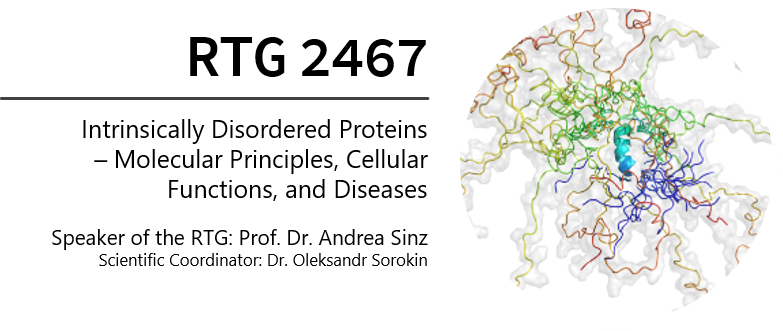
Research Training Group RTG 2467
Intrinsically Disordered Proteins – Molecular Principles, Cellular Functions, and Diseases
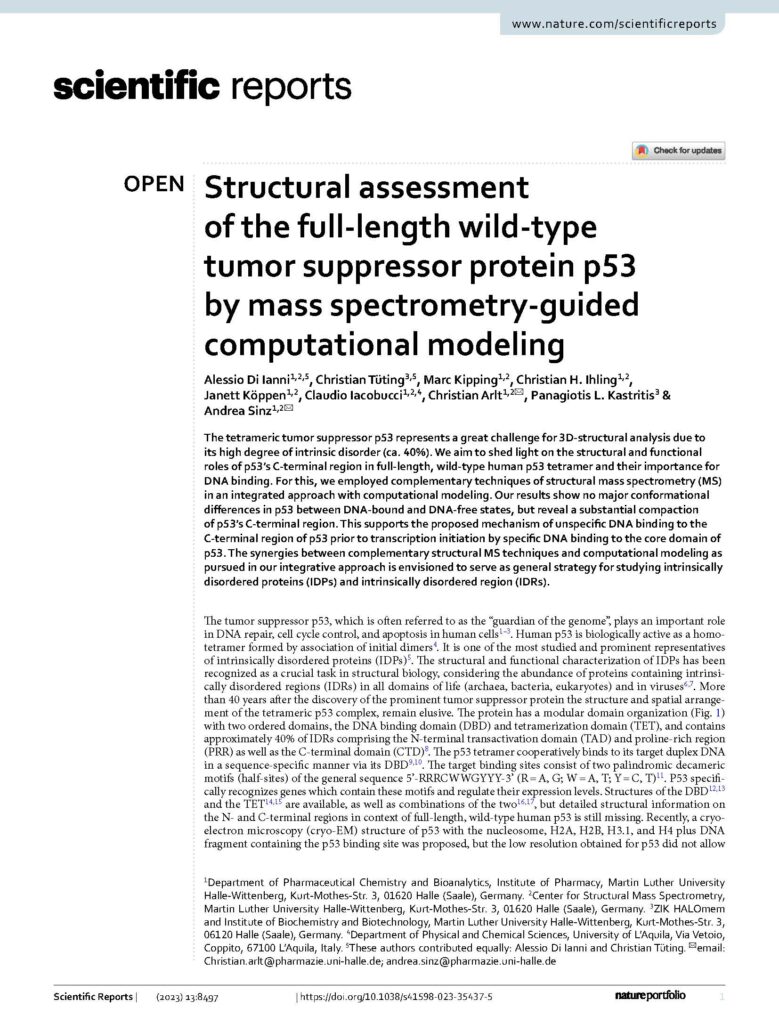
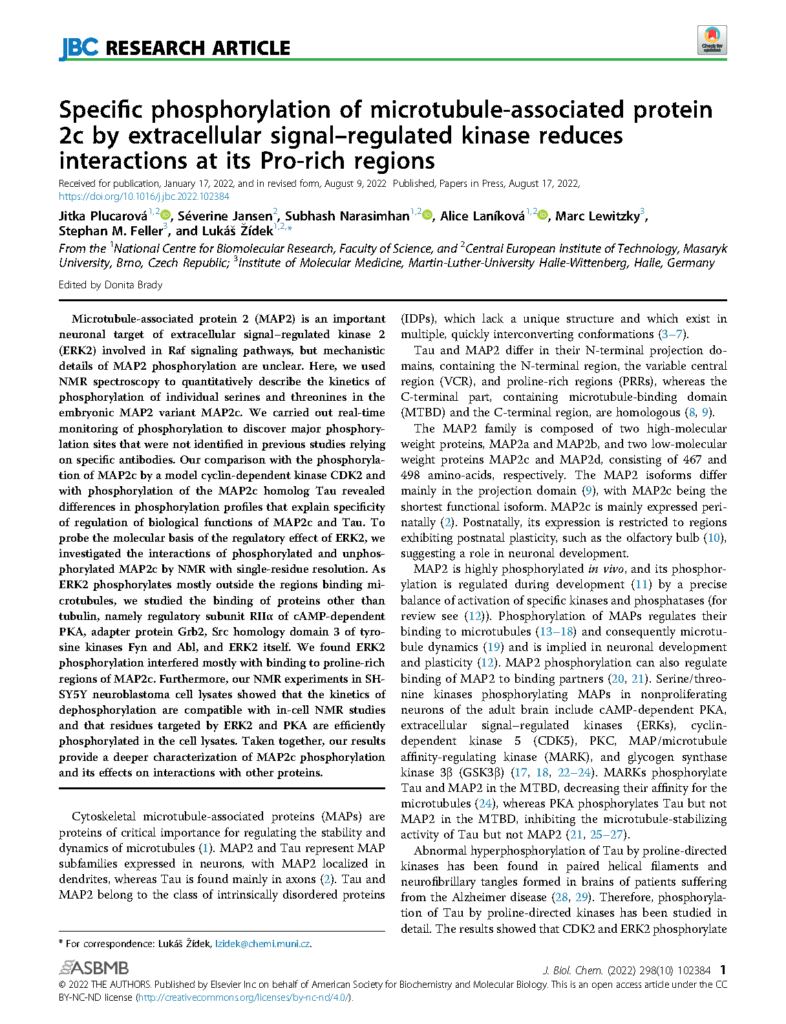
Approximately 40% of amino acid sequences in higher eukaryotes are predicted to be disordered, giving rise to intrinsically disordered proteins (IDPs) and intrinsically disordered regions (IDRs) that lack stable structural domains. In contrast to folded proteins with well-defined tertiary structure, IDPs and disordered regions populate heterogeneous conformational ensembles that are intrinsically dynamic. This intrinsic disorder is encoded at the sequence level through characteristic amino acid compositions, residue distributions, and low sequence complexity, which collectively disfavor the formation of persistent structural elements. As a consequence, many disordered protein regions evade classical structure determination approaches and remain insufficiently explored at the molecular and structural level.
Despite the absence of a fixed structure, IDPs are highly functional proteins that play central roles in the regulation of essential biological processes, including transcriptional control, signal transduction, RNA processing, and stress adaptation. Their biological function arises from the ability of intrinsically disordered regions to engage in diverse molecular binding interactions. Through sequence-encoded binding motifs embedded within disordered domains, IDPs can interact with multiple protein or RNA partners using distinct binding modes. Upon binding, disordered regions may undergo conformational rearrangements, partial folding into transient structural elements, or remain conformationally disordered, enabling context-dependent protein function. These properties allow intrinsically disordered proteins to act as hubs in molecular interaction networks and to drive the assembly of dynamic protein structures such as biomolecular condensates and membrane-less organelles.
The research program of the RTG2467 investigates intrinsically disordered proteins and regions using interdisciplinary approaches that integrate biochemistry, biophysics, and cell biology. This complementary expertise enables systematic studies ranging from in vitro characterization of disordered protein sequences and amino acid residues to cellular analyses of protein binding, structural dynamics, and functional outcomes. Particular emphasis will be placed on dissecting how intrinsic sequence features determine conformational behavior, molecular interactions, and protein function across different biological contexts.
A major focus of the program is the molecular characterization of IDP and IDR interactions with proteins and RNA. The research projects address fundamental questions concerning how intrinsically disordered regions mediate specific binding interactions while maintaining structural flexibility. In particular, the research aims to elucidate how a single disordered protein region can adopt different conformational states depending on its interaction partner or regulatory context. These studies will clarify how binding-induced conformational changes link disorder to protein function at the molecular level.
Beyond individual binding events, intrinsically disordered proteins challenge classical structure–function relationships by operating through distributed sequence features rather than isolated folded domains. Functional behavior often emerges from the collective contribution of multiple amino acid residues and weak binding elements within disordered regions, allowing graded regulation, cooperative interactions, and adaptive functional responses. Understanding how sequence composition, conformational disorder, structural flexibility, and binding dynamics jointly define protein function represents a central conceptual challenge. Addressing this challenge requires integrative frameworks that explicitly connect intrinsic disorder to molecular structure, conformational behavior, and biological function across scales.

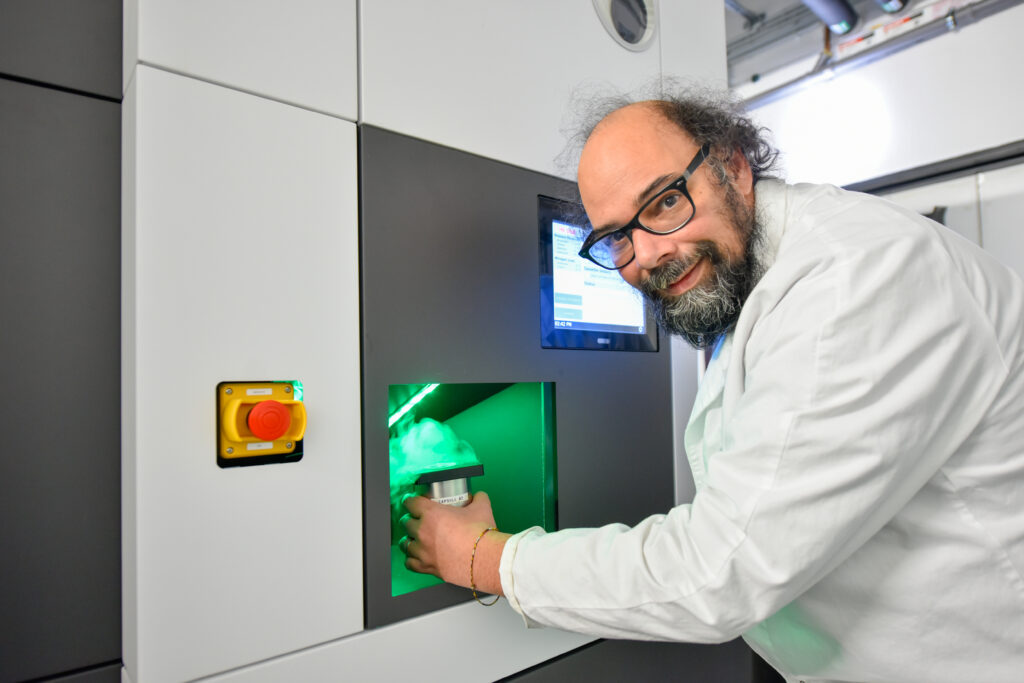
Congratulations to Prof. Dr. Kastritis on getting cool instruments!
Read more …

We made it! RTG2467 continues with the second funding period! Thanks to DFG and all people involved!
Read more …